Microplastic Defense

Disclosure: As an Amazon Associate I earn from qualifying purchases. Links to Amazon on this page are affiliate links. Learn more

Best Laundry Microfiber Filters

Washing synthetic fabrics (polyester, nylon, acrylic) releases microfibers — one of the largest sources of microplastic pollution in wastewater. Studies of microfiber-catching devices show meaningful capture rates, with external inline filters generally outperforming in-drum balls and bags. France has even mandated microfiber filters on new washing machines.

These products are primarily about reducing what your household sends downstream rather than your own direct exposure — though if you line-dry indoors or have poor ventilation, fiber shedding matters at home too.

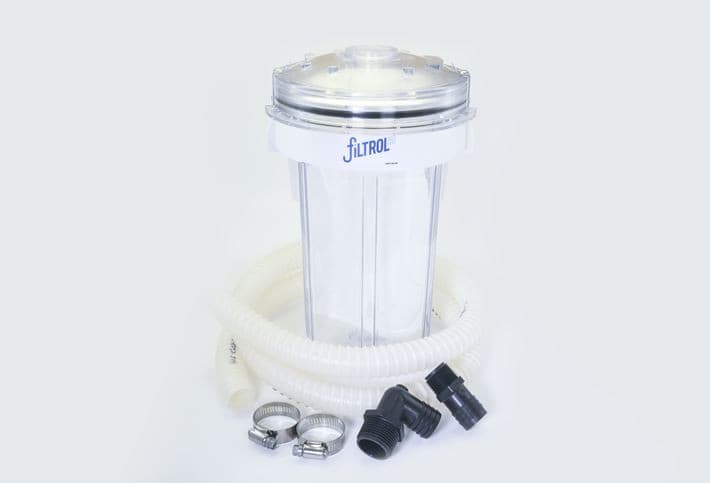
Filtrol 160 washing machine filter canister with discharge hose and fittings
Most effective

Filtrol 160 Washing Machine Filter

The US-made external filter that independent testing consistently ranks first: it mounts on the wall, connects to your washer's discharge hose, and filters every load automatically. Studies have measured capture around 87% of microfibers by count.

Key specs
  • Type: external, wall-mounted, connects to the discharge hose
  • Capture rate: ~87% by count / ~80% by weight in published testing
  • 160-micron reusable filter bag; replacements ~yearly
  • Includes housing, bracket, hose, and fittings; ~15-minute install

Pros

  • Highest capture rate of any consumer laundry product
  • Filters every load automatically — no routine change
  • Also protects septic systems from lint (its original job)
  • Reusable bag; cheap yearly replacements

Cons

  • Highest upfront price in the category
  • Needs wall mounting and hose connection
  • Filter bag needs emptying every 10–15 loads
  • Note: the maker says warranty support requires buying direct, not via Amazon
Check price on Amazon

Affiliate link — see disclosure

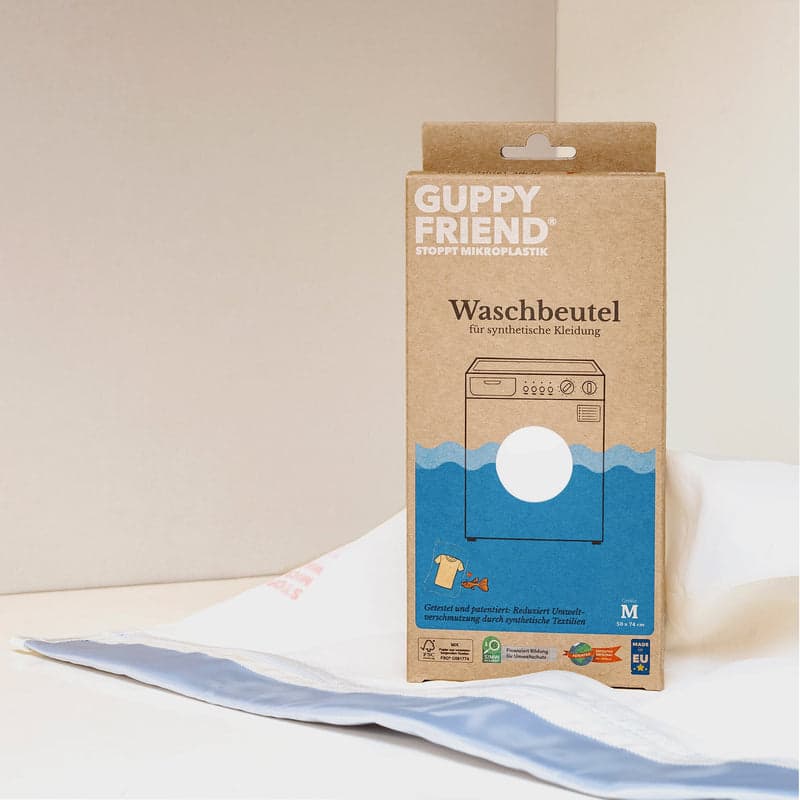
Guppyfriend washing bag with its cardboard packaging box
Easiest to start

Guppyfriend Washing Bag

The original microfiber wash bag: put synthetics inside, zip, wash. Its fine monofilament mesh keeps shed fibers in the bag — independent testing puts capture at roughly half of released fibers, and it measurably reduces shedding in the first place.

Key specs
  • Type: in-drum zip bag, ~50 × 74 cm
  • Capture rate: ~54% of released fibers in comparative testing
  • Untreated polyamide 6.6 monofilament mesh
  • Hand-remove collected fibers into the trash after several washes

Pros

  • Cheapest meaningful capture option
  • Zero installation — works in laundromats and rentals
  • Doubles as a delicates bag and reduces fiber breakage

Cons

  • Only treats the clothes you remember to put in it
  • Roughly half the capture rate of an external filter
  • Fibers must be picked out by hand (do it dry — it's easier)
Check price on Amazon

Affiliate link — see disclosure

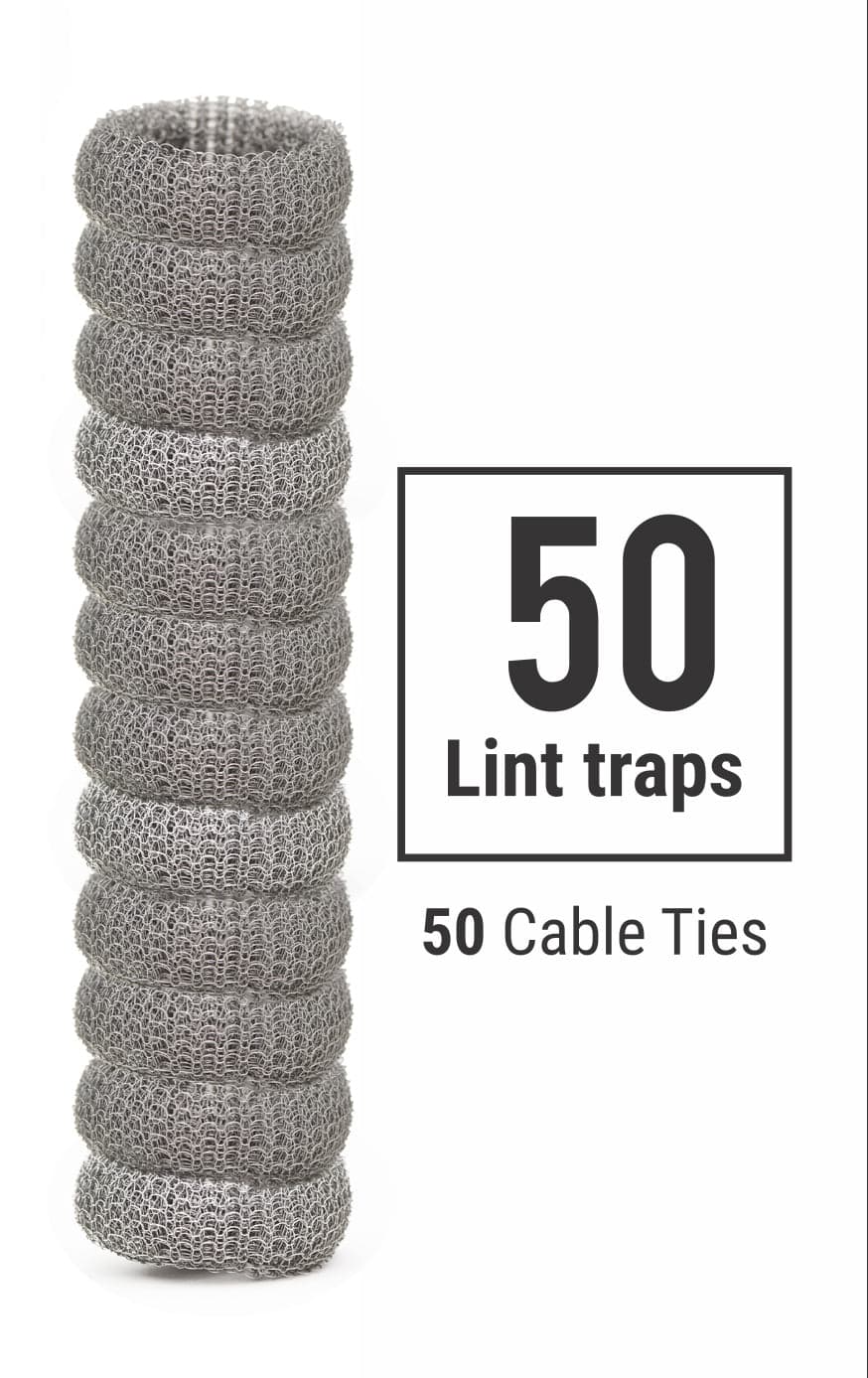
DR Quality Parts stainless steel mesh lint traps, 50-pack with 50 cable ties
Budget catch-all

DR Quality Parts Stainless Mesh Lint Traps (50-pack)

The old-school option: stainless mesh socks that zip-tie onto the end of a washer drain hose that empties into a utility sink. Honest framing: these catch visible lint and coarse fibers, not certified microfiber-scale capture — but they cost almost nothing and beat nothing at all.

Key specs
  • Type: 10-inch mesh trap secured to the drain hose outlet with included cable ties
  • Fits 1- to 3-inch drain hoses that discharge into a sink or standpipe you can reach
  • Mesh is far coarser than dedicated microfiber filters — expect partial capture
  • 50 traps and 50 cable ties per pack; replace each trap when about two-thirds full

Pros

  • Costs a few cents per trap
  • Tool-free, 2-minute install
  • Visibly demonstrates how much lint leaves each load

Cons

  • Not a certified microfiber filter — fine fibers pass through
  • Only works with accessible drain-hose setups
  • Single-use; traps go in the trash when full
Check price on Amazon

Affiliate link — see disclosure

Before you buy

External filters work best

Independent comparisons consistently rank external inline filters above in-drum options for capture rate. If you own your machine and can mount a filter, that's the effective choice; wash bags and drain-hose traps are the renter/laundromat fallback.

Dispose of captured fibers in the trash

Never rinse captured lint down a drain — that defeats the purpose. Scrape collected fibers into the bin so they go to landfill rather than waterways.

Reduce shedding at the source

Washing synthetics less often, in cold water, on shorter cycles, and in fuller loads measurably reduces fiber shedding. A filter plus better wash habits beats either alone.