Microplastic Defense

Disclosure: As an Amazon Associate I earn from qualifying purchases. Links to Amazon on this page are affiliate links. Learn more

Best Water Filters for Microplastics

Drinking water — both tap and bottled — is one of the better-documented routes of microplastic exposure. The good news: filtration is one of the few exposure-reduction steps with meaningful evidence behind it. Reverse osmosis membranes have pore sizes far smaller than typical microplastic particles, and NSF/ANSI 401 certification includes an emerging-contaminant category that covers microplastics for some products.

What to look for: NSF/ANSI 401 certification (tested for microplastics reduction), NSF/ANSI 58 for reverse osmosis systems, and a filtration rating well below 1 micron. Be skeptical of generic "removes 99% of contaminants" claims without a certification to back them up.

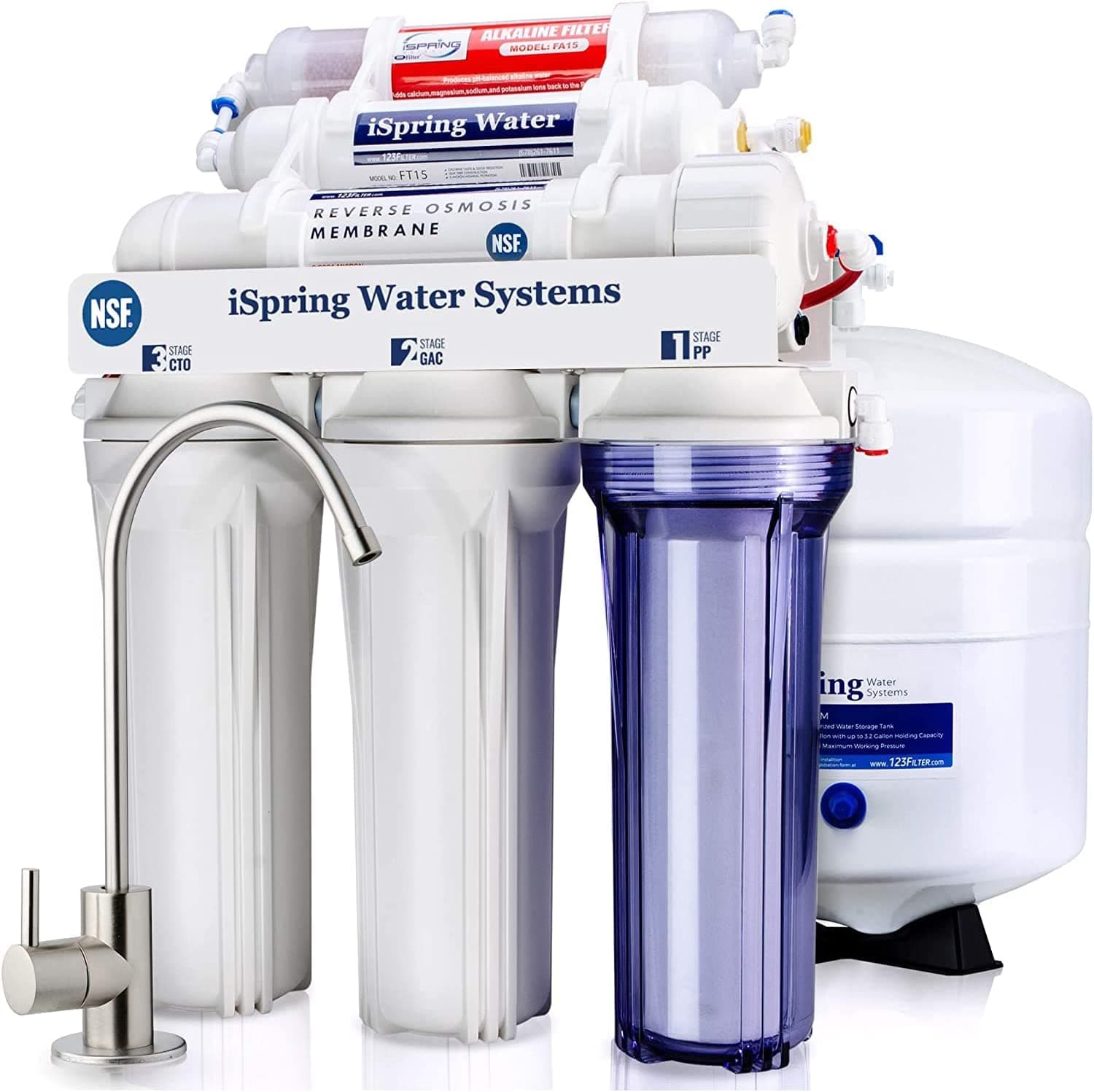
iSpring RCC7AK 6-stage under-sink reverse osmosis system with storage tank and brushed nickel faucet
Best overall

iSpring RCC7AK 6-Stage Reverse Osmosis System

One of the best-selling under-sink RO systems on Amazon and a consistent top pick across independent review sites. Six stages including an alkaline remineralization filter that adds back the minerals RO strips out, fixing the 'flat' taste some people dislike in RO water.

Key specs
  • Type: under-sink reverse osmosis, 75 gallons/day, tank-based
  • Certification: NSF/ANSI 58 (RO system performance)
  • 6 stages: sediment, 2× carbon, RO membrane, post-carbon, alkaline remineralization
  • RO membrane filters to ~0.0001 micron — far below microplastic particle sizes

Pros

  • RO membrane removes particles orders of magnitude smaller than microplastics
  • Also reduces lead, fluoride, PFAS, and 1,000+ other contaminants per manufacturer testing
  • Remineralization stage gives better-tasting water than basic RO
  • DIY-friendly install with strong manufacturer support and videos

Cons

  • Requires under-sink installation (drilling a faucet hole; 1–2 hours DIY)
  • Tank and filters take significant cabinet space
  • Like all RO, produces wastewater during filtration
Check price on Amazon

Affiliate link — see disclosure

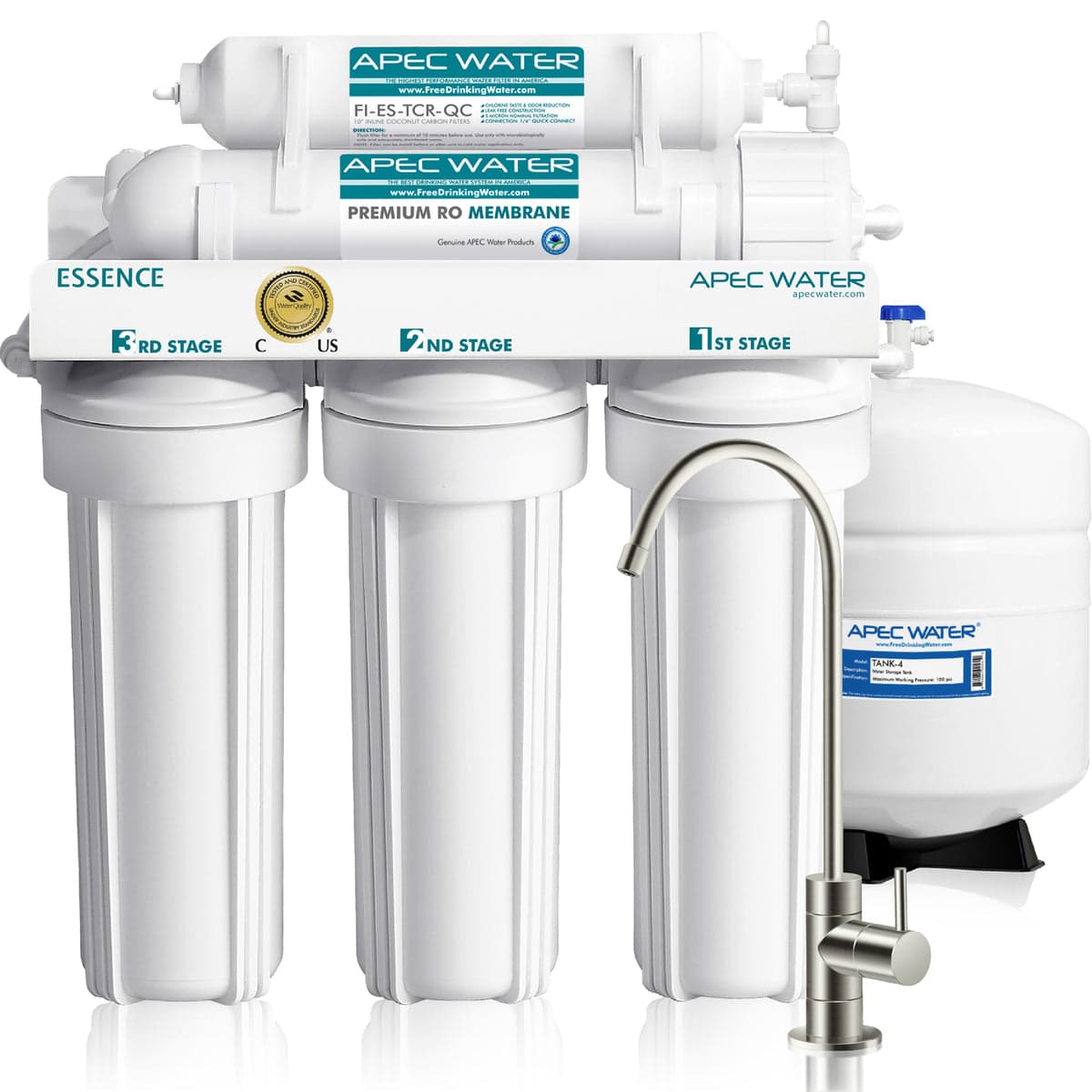
APEC ROES-50 Essence 5-stage under-sink reverse osmosis system with storage tank and faucet
Best value RO

APEC Water Systems ROES-50 5-Stage RO System

APEC's most popular model and the usual budget recommendation among under-sink RO systems: a no-frills 5-stage design with WQA Gold Seal certification, US assembly, and low long-term filter costs.

Key specs
  • Type: under-sink reverse osmosis, 50 gallons/day, tank-based
  • Certification: WQA Gold Seal, NSF/ANSI 58 & 372
  • 5 stages: sediment, 2× carbon, RO membrane, post-carbon
  • Long-lasting filters — among the lowest annual maintenance costs in class

Pros

  • Same core RO microplastics protection as pricier systems
  • WQA Gold Seal certification for lead, arsenic, fluoride, and TDS reduction
  • Cheap, infrequent filter replacements
  • Large owner base — parts and help are easy to find

Cons

  • Slower 50 GPD output than newer systems
  • No remineralization stage — purist RO taste isn't for everyone
  • Same install and cabinet-space requirements as any tank RO
Check price on Amazon

Affiliate link — see disclosure

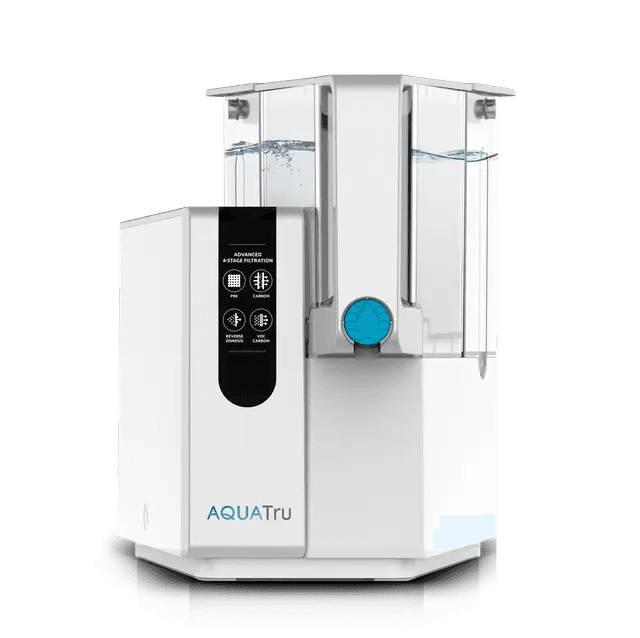
AquaTru Classic countertop reverse osmosis water purifier with clear tank
Best no-install option

AquaTru Classic Countertop RO Purifier

A countertop reverse osmosis unit with no plumbing required — fill the tank and it purifies into a pitcher. Its standout: IAPMO certification to five NSF/ANSI standards including 401, with microplastics reduction explicitly in scope.

Key specs
  • Type: countertop reverse osmosis, no plumbing or installation
  • Certification: IAPMO-certified to NSF/ANSI 42, 53, 58, 401 & P473
  • 4-stage filtration; certified to reduce 84 contaminants incl. microplastics, lead, PFOA/PFOS
  • Filter life: pre/carbon ~6 months, VOC ~12 months, RO membrane ~24 months

Pros

  • The rare product with microplastics-relevant certification (NSF/ANSI 401) in writing
  • True RO performance for renters — no plumbing changes at all
  • Independent third-party testing publicized for PFAS removal
  • Portable — moves with you between homes

Cons

  • Takes real counter space
  • Tank refills are manual — less convenient than a plumbed system
  • Highest filter-replacement cost of our picks
Check price on Amazon

Affiliate link — see disclosure

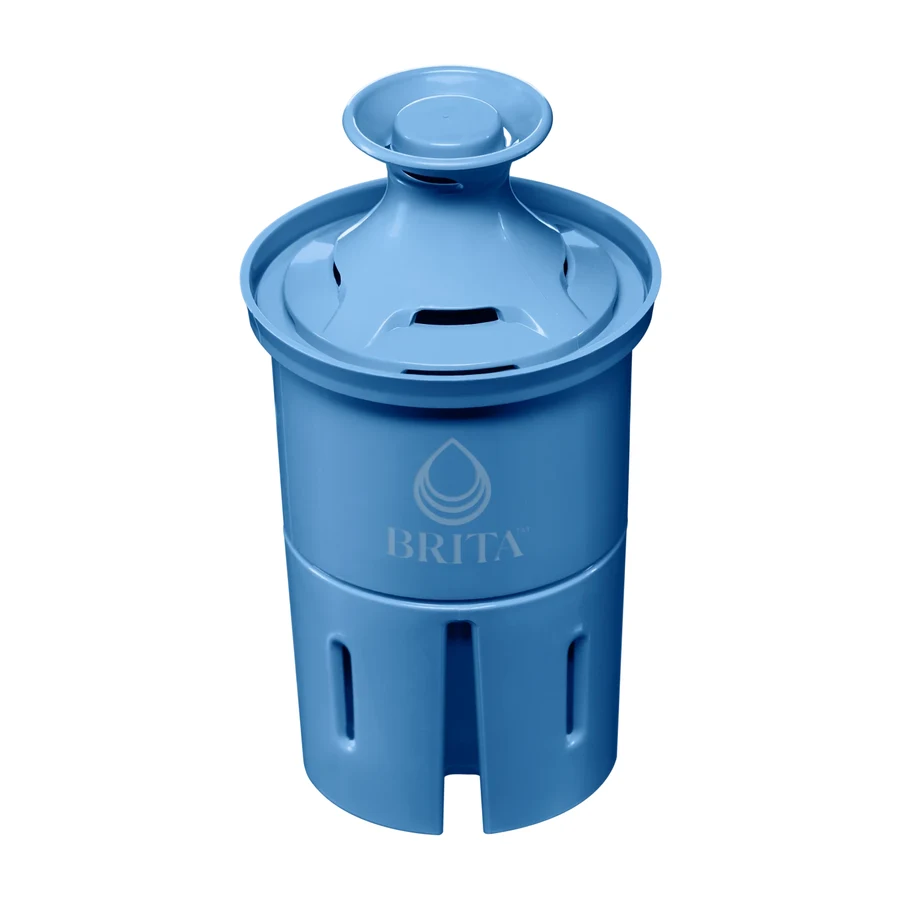
Brita Tahoe 10-cup water filter pitcher in white with a blue Brita Elite filter
Budget pick

Brita Tahoe 10-Cup Pitcher with Elite Filter

The Brita Elite filter is the notable exception in the pitcher world: WQA-certified to NSF/ANSI 401, with microplastics reduction named in its certification — most pitcher filters (including Brita's own Standard filter) can't say that. The 10-cup Tahoe is the roomiest pitcher that takes it.

Key specs
  • Type: gravity pitcher, large 10-cup capacity, includes 1 Elite filter
  • Certification: WQA-certified to NSF/ANSI 42, 53 & 401 — incl. microplastics and 99% lead reduction
  • Filter life: ~120 gallons / 6 months, about 3× Brita's Standard filter
  • BPA-free; no installation

Pros

  • Cheapest certified microplastics reduction available
  • Elite filter lasts 6 months — fewer swaps and lower per-gallon cost than typical pitchers
  • 10-cup capacity suits families better than compact pitchers
  • Replacement Elite filters must be the Elite (white box) — the certification belongs to it, not the Standard filter

Cons

  • Takes fridge space; still needs refilling unlike a plumbed system
  • Slower flow than tap or plumbed filters; some owners report the flow slows as the filter ages
  • Less thorough overall than reverse osmosis
Check price on Amazon

Affiliate link — see disclosure

Before you buy

Certifications beat marketing claims

NSF/ANSI 401 includes microplastics as an emerging contaminant category, and NSF/ANSI 58 covers reverse osmosis performance. A product that lists a real certification number is making a verifiable claim; a product that says "removes microplastics" with no certification is making a marketing claim.

Match the filter to your situation

Renters usually can't install under-sink systems — a countertop unit or certified pitcher is more realistic. Homeowners who want the most thorough option should look at reverse osmosis first.

Budget for replacement filters

The purchase price is only part of the cost. A cheap pitcher with expensive cartridges can cost more per year than an under-sink system. Check the filter life and per-cartridge cost before deciding.