Microplastic Defense

Disclosure: As an Amazon Associate I earn from qualifying purchases. Links to Amazon on this page are affiliate links. Learn more

Microplastic Test Kits: An Honest Look

Honesty first: consumer microplastic test kits are the weakest product category on this site. Laboratory microplastic analysis uses techniques like FTIR or Raman spectroscopy to identify particles by polymer type — consumer kits can't do that. Most home kits detect particles visually (with a filter and magnifier) or test proxy indicators, and they generally can't distinguish plastic from cellulose fibers, sand, or other particles.

That's why our water picks are all mail-in laboratory tests rather than home gadgets: you collect the sample, an accredited lab runs the actual analysis. It costs more than a strip kit, but it's the only kind of microplastics result worth paying for. We've also included the viral at-home blood test — not as a recommendation, but with a clear-eyed warning about why its number can't tell you much. We flag what each test can and can't tell you on every card — read them before buying.

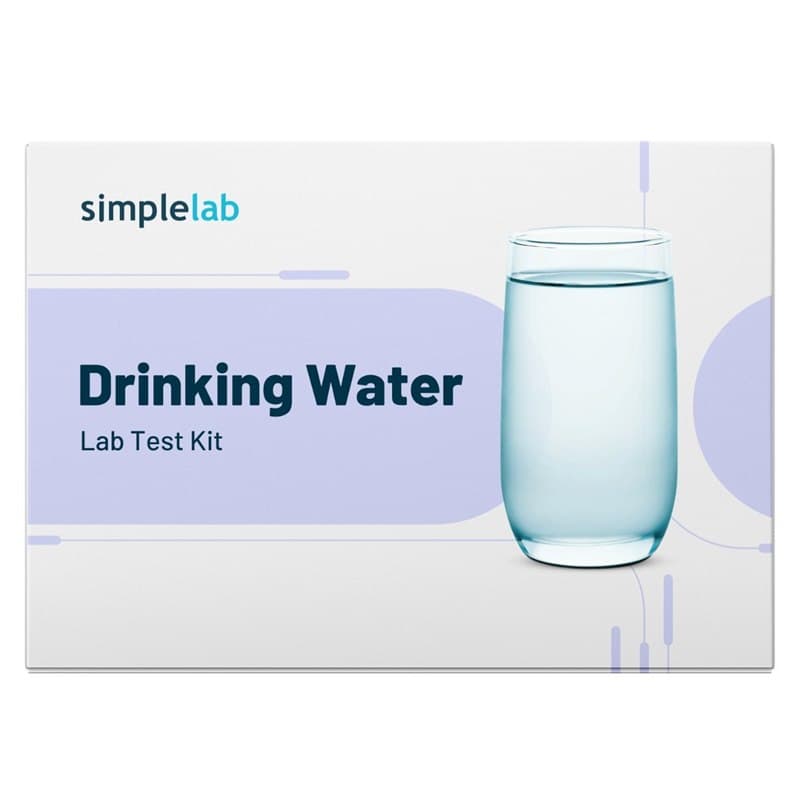
SimpleLab Tap Score drinking water microplastics lab test kit retail box
Best for most people

Tap Score Advanced Microplastics Water Test (SimpleLab)

The microplastics test worth buying: a mail-to-lab kit from SimpleLab, the company behind Wirecutter's top-ranked home water tests. You collect a sample, ship it prepaid, and an accredited lab reports not just how much plastic is in your water but which polymers — PET, polyethylene, nylon, and so on — using microscopy plus Raman spectroscopy. It's the real methodology no home gadget can replicate.

Key specs
  • Method: mail-in sample; microscopy + Raman spectroscopy
  • Detects to 1 micron; quantifies and identifies polymer types down to 10 microns
  • Reports ~43 microplastic types with concentrations
  • Turnaround: ~12 business days after the lab receives the sample

Pros

  • Polymer identification — the analysis level research labs use
  • Can hint at the source (e.g. nylon fibers point at textiles)
  • Includes sampling materials, instructions, and prepaid shipping

Cons

  • The most expensive option on this page
  • Overkill if you just want a before/after filter check
  • Drinking water only — not for pond or aquarium water
Check price on Amazon

Affiliate link — see disclosure

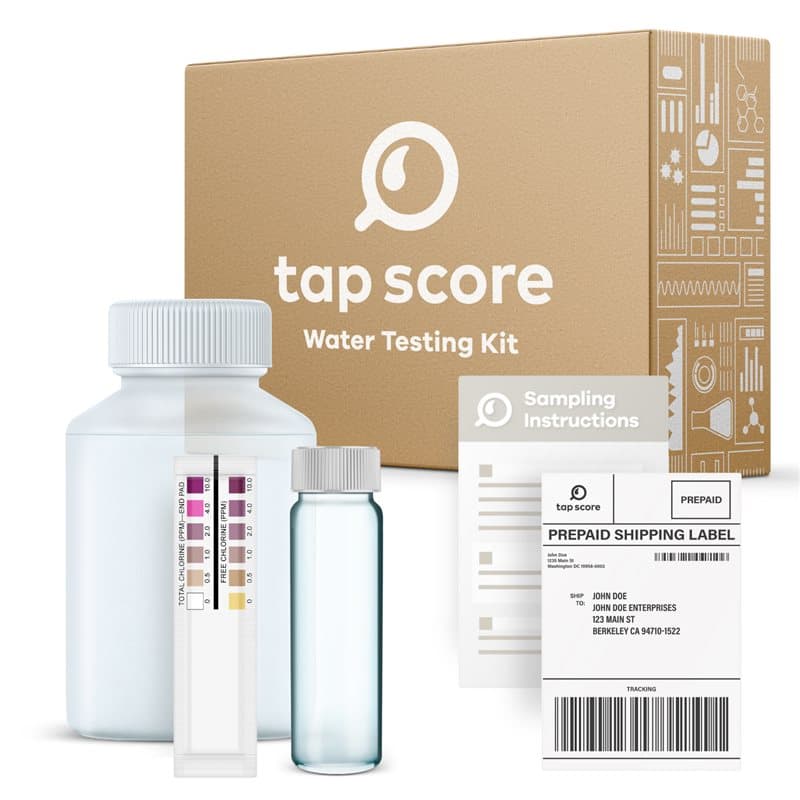
Tap Score Advanced Home Water Test kit with sample bottles, test strips, and prepaid shipping label
Best general checkup

SimpleLab Advanced Home Water Test (116 analytes)

Not a microplastics test — and that's the point. This 116-analyte lab panel (lead, copper, PFAS-adjacent metrics, hardness, and more) is the test Wirecutter has ranked #1 for overall home water quality. If you only test your water once, this tells you far more about real risks than any microplastics-only test.

Key specs
  • Method: mail-in sample, EPA-certified partner labs
  • Tests 116 analytes: metals, minerals, disinfection byproducts, and more
  • Does NOT test for microplastics — pair with the microplastics test above if you want both
  • Works for city and well water

Pros

  • The most informative single water test you can buy
  • Catches higher-priority problems (like lead) that outrank microplastics
  • Detailed report with health benchmarks and treatment suggestions

Cons

  • No microplastics coverage — don't buy it expecting that
  • Lab pricing, not strip-kit pricing
  • Mail-in turnaround like the others
Check price on Amazon

Affiliate link — see disclosure

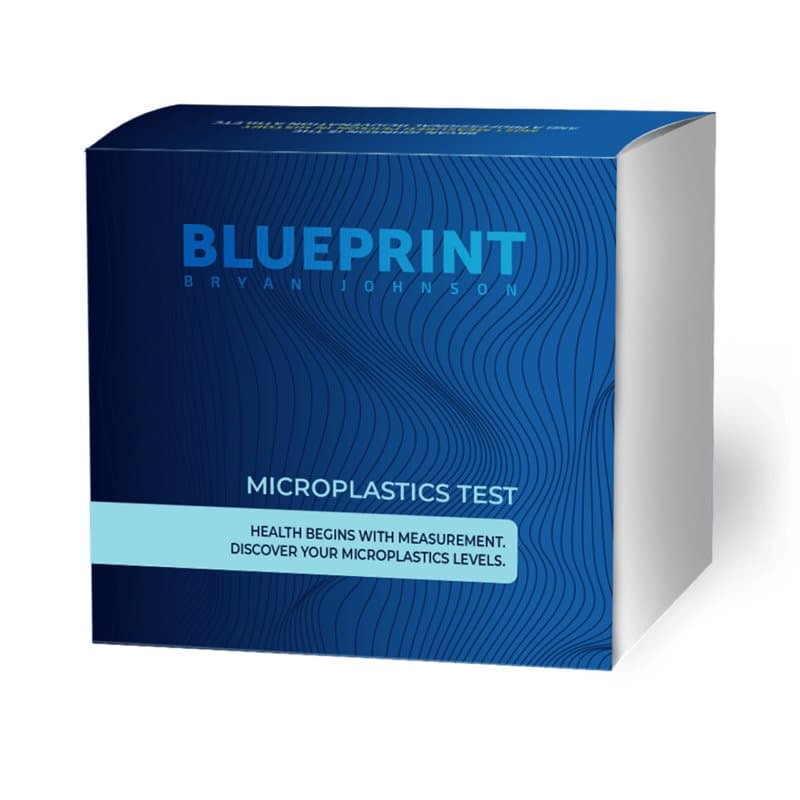
Blueprint by Bryan Johnson At-Home Microplastics Blood Test Kit box
Buyer beware

Blueprint At-Home Microplastics Blood Test (Bryan Johnson)

The one that gets the headlines: an at-home kit that reports how many microplastic particles are supposedly in your blood. We list it because people keep asking about it — not because we recommend it. Unlike a water test, a blood result has no reference range, no clinical meaning, and nothing you can do about the number. Read the cons before you spend a cent.

Key specs
  • Method: at-home blood self-collection, mailed to a CLIA/COLA-certified partner lab
  • Lab uses a plastic-free fluorescence microscopy protocol (glass, metal, and paper only)
  • Report gives particle count, size, and concentration, plus how you rank vs. other buyers
  • Turnaround roughly 4–6 weeks; tests your blood, not your water

Pros

  • The lab side takes real contamination precautions (plastic-free handling)
  • Everything is included — collection supplies, shipping, and analysis
  • Satisfies curiosity if you understand it's a novelty, not a health test

Cons

  • No established reference ranges — there is no 'normal' to compare your number against
  • Experts note there's no proven way to remove microplastics from your body, so the result is not actionable
  • Home collection has no field blank, so your own skin, air, or supplies can contaminate the sample and inflate the count
  • Costs about the same as a real water lab test while telling you far less you can act on
Check price on Amazon

Affiliate link — see disclosure

Before you buy

A blood microplastics test is not a health test

Kits like Blueprint's report a particle count from your blood, but there is no reference range that says what's normal, no way to know if home collection contaminated the sample, and — per the researchers who first found plastic in human blood — no proven method to remove it. Treat the number as a curiosity, not a diagnosis. If you want a result you can act on, spend the money on a certified water filter instead.

Know what you're actually buying

No home kit can identify polymer types. If a consumer kit claims to 'detect microplastics,' it is almost certainly showing you generic particulates. Real identification requires FTIR or Raman spectroscopy in a lab.

A TDS meter is not a microplastic test

TDS (total dissolved solids) meters measure dissolved ions like calcium and sodium. Microplastics are suspended particles, not dissolved solids — a TDS reading tells you nothing about them.

When testing makes sense

If you mainly want peace of mind, putting the same money toward a certified filter is usually the better buy. Testing makes the most sense as a before/after check around a filtration upgrade, or when you have a specific concern about your supply.